Bhima Mandali Rock Art: The Odisha Government’s recent announcement of approving an amount of Rs 22 crore for the development of Bhima Mandali Eco-Heritage Tourism Site at Rairakhol has raised the hackles of many conservation experts.
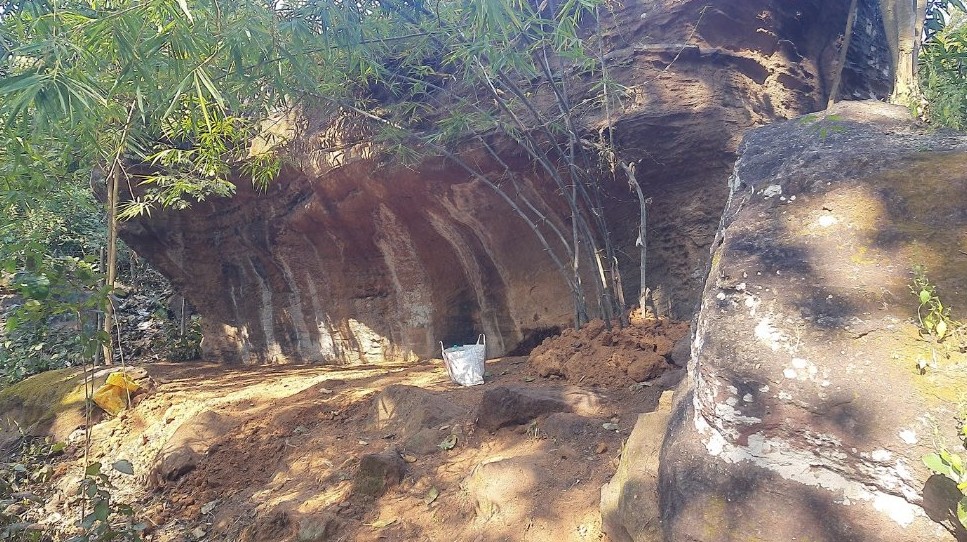
The Bhima Mandali caves are located within the Naktideul Forest Range near Rairakhol and are known for their ancient rock art, which have mythological connections. The site has many caves and rock shelters, hidden in the thick forest, which have paintings and stone inscriptions that are around 15,000 years old. There are prevailing myths of the site being associated with the Pandavas in the Mahabharat.
Even though the caves have not been formally listed as a Protected Site by the Archaeological Survey of India, the ASI has carried out archaeological surveys and excavations and have recorded prehistoric rock art, stone tools, and habitation evidence. In 2023, the ASI had stated that the Rock Art Sites of Odisha lying neglected across the state would get the priority in according the status of protected sites. Odisha has 140 caves with rock art but only a single site, i.e., Vikramkhol located in the reserve forest of Belpahar range in Jharsuguda – is protected by the ASI. Even at Vikramkhol, 80 per cent of its rock art has been damaged. The Sitabhinj rock art in Keonjhar too had faded away and is non decipherable.
According to Anil Dhir, who has visited the site many times, the Ambajhol cave in Bhima Mandali has the only depiction of elephants in rock art in the state, of the three elephants, only two can be seen now. Dhir said that the need to bring the caves under ASI fold has now become necessary because over the last few years, many of the rock engravings and paintings have eroded due to various reasons which include rising temperature, removal of forest canopy and foliage, vandalism, graffiti, fires lit by picknickers etc.
The Naktideul Forest Range where the caves are located sits within a vital Asian Elephant corridor of the Rairakhol Forest Division and borders the Khalasuni Wildlife Sanctuary. The elephant corridors see frequent movements and there are frequent human-elephant conflicts, a villager was killed by an elephant just last week. The sanctuary is home to Indian Bison, Sambar, Spotted Deer, Barking Deer, Mouse Deer, Four-horned Antelope, and wild Boars. It also has Leopards, Sloth Bears, Pangolins, Civets and Dholes, the wild dogs which are making a comeback.
The Sambalpur MP Dharmendra Pradhan, who had himself visited the site a few months ago has thanked the CM of Odisha for the ‘commendable’ initiative of setting up Eco-Heritage facilities near the caves and putting it in Odisha’s tourism map.
Surya Sarathi Roy, the Director Operations of IHAR (Indian History Awareness and Research) has said that Rock Art is a precious cultural heritage of mankind, they are considered as one of the earliest fine arts practiced by humans. Preserving rock art sites requires a combination of physical barriers, digital documentation, visitor management and community-led stewardship to protect ancient pictographs and petroglyphs from natural erosion and human damage. Vandalism, graffiti, unregulated mass tourism, and touching the art causes irreversible harm.
In his opinion, the Archaeological Survey of India should install perimeter fencing, build boardwalks or viewing barriers to keep visitors at a safe distance, and install drip lines to divert rainwater away from painted panels. The felling of trees must be forbidden, the paintings get exposed to sunlight, wind and rain, which results into the quickened damage.
Many a time, visitors themselves cause damage by sprinkling water on these figures to make them bright under reflection for study. Roy is of the opinion that capacity building programs along with the local stakeholders should be undertaken, who can ensure responsible tourism. Besides, a Rock Art Circuit can be developed within the State which will be of great interest for researchers and visitors.
Agencies like the National Research Laboratory for Conservation and Indian National Trust for Art and Cultural Heritage (INTACH) should be roped in by the Archaeological Survey of India and State Archaeological Department as they can play an important role for taking protective measures to save these rock paintings.
According to Anil Dhir, the State Head of IHAR, the Bhima Mandali caves were home to prehistoric humans long before Harappa and Mohenjodaro. The caves reveal a story that could change the region’s ancient past narrative. The ASI should accord it the status of a protected site, as many more caves lie undiscovered in the thick forests of the range. Setting up an Eco Resort of any sort will damage the fragile flora and fauna and be a threat to the preservation of these unique civilizational heritage.